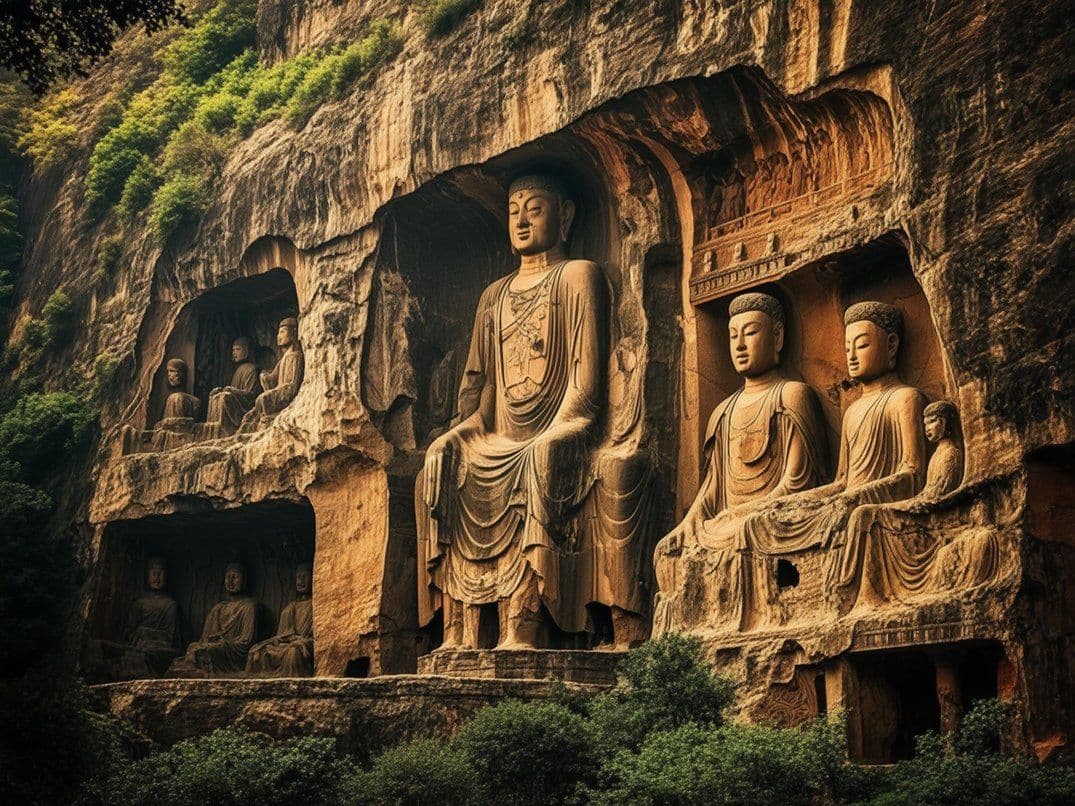
Discovering Longmen Grottoes: Luoyang's Ancient Marvel
Discovering Longmen Grottoes: Luoyang's Ancient Marvel
The Longmen Grottoes in Luoyang showcase over 2,300 caves with 100,000+ Buddhist statues. Our AI Travel Agent suggests visiting in spring or autumn for the best experience. The site features the stunning 17-meter Vairocana Buddha and offers affordable entry at ¥120.
Historical Background of the Longmen Grottoes
The origin of the Longmen Grottoes dates back to the late 5th century during the Northern Wei dynasty, a period renowned for the growth and patronage of Buddhism. These grottoes, majestically nestled along the limestone cliffs of the Yi River's southern bank, serve as a testament to centuries of artistic evolution and religious devotion. Successive dynasties, from the Northern Wei to the Tang, meticulously carved thousands of caves, niches, and statues, offering a spiritual haven parallel to few others. This rich history makes the Longmen Grottoes a must-see for those exploring Chinese heritage—be it through your Trip Planner App or guided tours offered by local Luoyang travel agents.
Key Architectural and Artistic Highlights
Standing as an open-air museum, the Longmen Grottoes feature over 2,300 caves and niches stretching across two kilometers of limestone cliffs. Housing more than 100,000 statues, these artistic marvels vary from minute figures to colossal Buddhas. Among the standout features is the magnificent Vairocana Buddha located within the Fengxian Cave. This 17-meter-tall masterpiece from the Tang dynasty showcases intricate details, from divine facial expressions to meticulously carved robes. As a top attraction on any Luoyang itinerary, exploring these grottoes reveals the rich story of Buddhism’s artistic and cultural influence in China.
Spiritual and Cultural Importance
The Longmen Grottoes have played a crucial role in embedding Buddhism into Chinese culture, transforming foreign beliefs into a profound, local spiritual practice. Each carving and inscription within these caves embodies layers of faith-based symbolism — from meditative Buddhas to lotus blooms symbolizing purity. Pilgrims from across East Asia and curious travelers alike have been mesmerized by the area's spiritual depth, offering insights into the intertwining of political power and religious devotion over centuries. Using your AI Travel App for a detailed tour can enhance your understanding of these spiritual connections.
